
From Floating Microgrids to Smart Highways and Airports, One Visionary Is Rewiring America’s Energy Future
Before most people had even heard the phrase “electrification of transportation,” Anthony Baro was already building it.
While the solar industry sprinted to put panels on rooftops and auto manufacturers raced to electrify their fleets, Anthony quietly tackled the pieces no one else was talking about—the overlooked infrastructure required to meet our nation’s growing appetite for sustainable power.
I first met Anthony in 2021 during a brief call about his expiring SunPower DPF credits. The call lasted five minutes. The impact of that conversation? It hasn’t stopped.
At the time, he was already well into transforming E2SOL, his renewable energy development firm, into a force driving the convergence of solar energy, energy storage, mobility, and intelligent infrastructure. But his vision began much earlier—with boats.
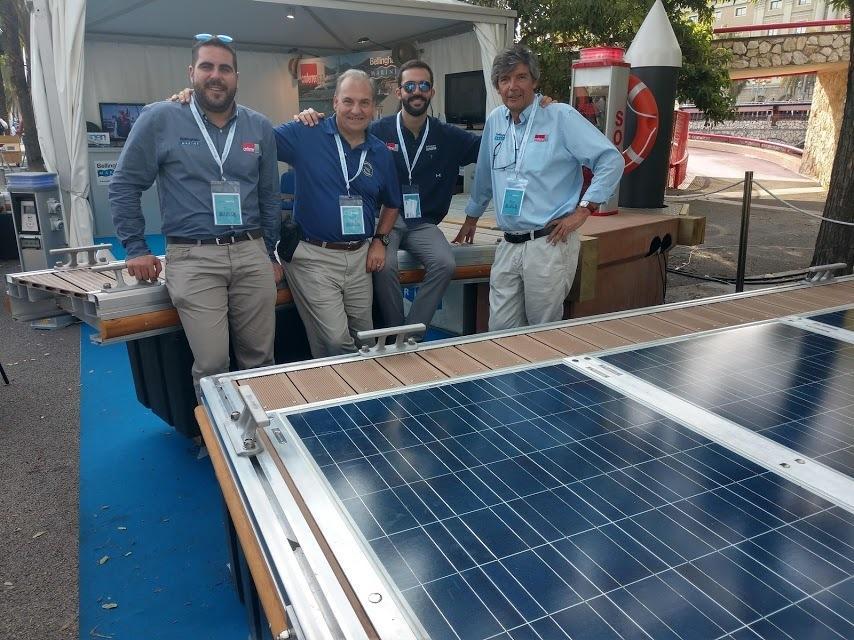
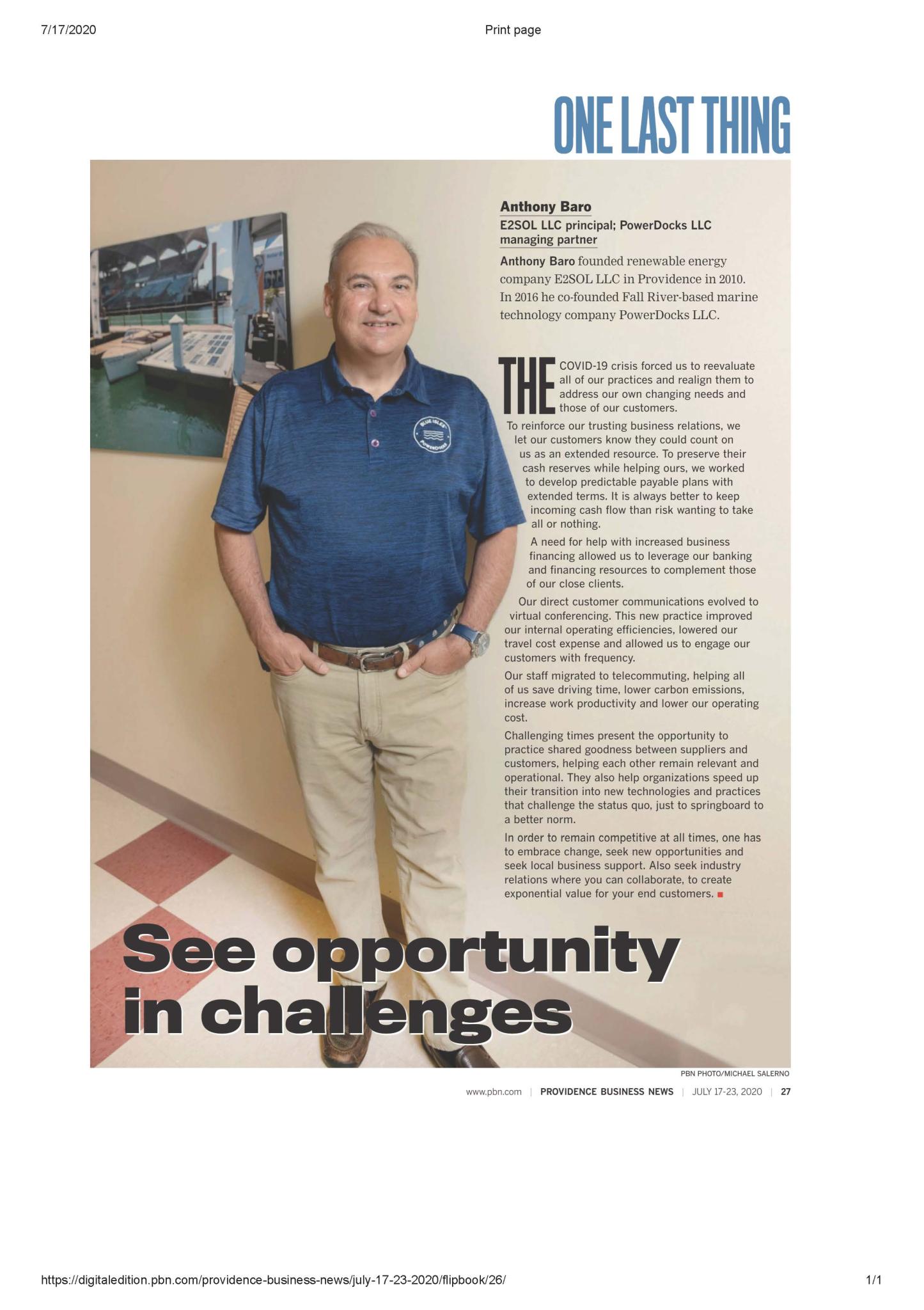
In 2016, Anthony co-founded PowerDocks, a company designed to bring renewable energy, informatics, and sustainability to aquatic environments—something almost no one was thinking about at the time. He saw the future of boating not as a luxury market but as a critical and underserved sector in the clean energy transition. When he looked at a marina, he saw potential charging stations, microgrids, and floating platforms generating and managing their own power.
This wasn’t theory. PowerDocks launched the first-of-its-kind floating microgrid capable of powering electric boats and marine operations off-grid, using solar panels, energy storage, and smart data. By 2018, the company had already received the National Marine Manufacturers Innovation of the Year award and multiple other honors. In 2021, E2SOL acquired all outstanding shares of PowerDocks, rebranding its solutions under the name POWER+DOCKS and integrating it into a larger electrification platform.
And while that level of vision might have been enough innovation for an entire career, for Anthony, it was just the beginning. Since then, he’s continued to push the boundaries of what energy infrastructure can be—pioneering patent-pending technology that transforms passive spaces like highway medians into active, distributed energy networks. Now, with one eye on the road and the other on the sky, Anthony is helping shape the next evolution of electrification. From fast-charging corridors to energy-resilient airports preparing for electric air taxis and commuter flights, his work is already laying the groundwork for a future where renewable energy and smart mobility are seamlessly integrated.
Anna: Anthony, most people wouldn’t have thought to start their electrification journey with boats. Why marine infrastructure?
Anthony: No one was thinking about how boats would charge or how marinas would adapt. I saw a massive gap and an opportunity. Boats were getting cleaner, but the infrastructure was still stuck in the diesel age. That’s why we created PowerDocks. We designed floating, solar-powered microgrids that could generate and store energy off-grid, and we brought smart tech into marinas before anyone else did. We built them to be modular, mobile, and scalable so they could work in everything from remote mooring fields to busy urban marinas.
Anna: Did you expect it to take off the way it did?
Anthony: We knew it was the right idea, but the recognition surprised us. Winning the Innovation of the Year award from the National Marine Manufacturers Association in 2018 validated the market need. But more importantly, it showed that people were ready to think differently about how infrastructure could evolve. That gave us the momentum to keep expanding.
Anna: And that momentum carried over into your work on land—specifically highways. Can you tell us about your Smart Highway Initiative?
Anthony: Absolutely. Highways are probably the most underutilized infrastructure in America. We have all this real estate—concrete medians—that just sits there. We asked, why not turn those into energy-generating assets? So, we designed a solar beam system that installs directly into the median, complete with battery storage and microinverters. It generates power and supports EV fast charging at rest stops and exits. We’ve filed patents and partnered with companies like Yotta Energy to integrate their storage technology directly into our platform.
Anna: That’s a big shift from marine to roadside. What makes your approach to highway electrification unique?
Anthony: We don’t treat highways like a retrofit. We design with energy in mind from the start. This isn’t just about throwing up a few chargers at rest stops—it’s about creating a distributed, scalable energy network that turns the highway itself into part of the grid. What most people don’t realize is that in the U.S., our existing charging infrastructure just isn’t built for long-distance travel. You can’t drive cross-country confidently because there’s no guarantee of fast, accessible charging along the way.
Meanwhile, Europe is already solving this. Countries like Germany are integrating EV fast-charging into their autobahn system—dedicated zones with high-speed chargers powered by renewables. That’s the standard we need to match. Our Smart Highway Initiative is designed to do just that—using highway medians as energy assets to power fast-charging infrastructure where it’s needed. It’s modular, intelligent, and built to support the real-world demands of electrified mobility in America.
Anna: You’re also working on airport electrification. What are you seeing in that space?
Anthony: Airports are about to get overwhelmed. Between electric ground service vehicles, private EVs, commercial aircraft, and the coming wave of eVTOL passenger drones, the power demand at these hubs is about to skyrocket—and most of them aren’t ready. The typical airport infrastructure is reactive. We’re taking a proactive approach by designing integrated systems that combine solar, battery storage, and smart grid technology to make airports energy self-sufficient.
One of the most exciting areas we’re pioneering is wireless charging—specifically, a Bluetooth-based energy transfer system for electric aircraft. Think about it: traditional corded chargers are bulky, limit mobility, and waste energy through resistance, especially at scale. Our solution eliminates the need for physical cables. It wirelessly transfers power from stationary commercial storage solutions to aircraft systems with greater efficiency and flexibility. That’s a game-changer for charging electric planes, autonomous passenger drones, and airport support vehicles.
From a consumer standpoint, we’re on the edge of a huge shift in short-range commuter travel. Those small “puddle jumper” flights—think 30 to 100 miles between regional airports—are being replaced by 100% electric passenger drones and eVTOL aircraft. They’re quieter and cleaner and drastically reduce the carbon footprint of regional aviation. But to make that reality scalable, we need infrastructure that’s just as forward-thinking as the aircraft. That’s what we’re building.
Anna: What connects all of these projects—marine, highways, and airports? Is there a common thread?
Anthony: Integration. We’re connecting power generation, storage, and intelligent controls into one seamless ecosystem. Whether it’s a dock, a highway, or a runway, the mission is the same: deliver clean, reliable power exactly where it’s needed. The age of single-purpose infrastructure is over. We’re creating platforms that evolve, scale, and serve multiple functions in real time.
Anna: What does the future of electrification look like from where you stand?
Anthony: It’s everywhere. It’s embedded. You won’t even notice it—it’ll be part of your everyday life. Streets will power your cars. Rooftops will fuel your flights. Airports will act like microgrids. The infrastructure won’t just support mobility—it will be the mobility. That’s the shift we’re engineering.
Wrapping it Up
Anthony’s work through E2SOL is a powerful reminder that true innovation shapes trends. Whether it’s charging your EV during a highway pit stop, flying on a zero-emission aircraft, or docking an electric boat, the systems being built today will define how we live and move tomorrow. He’s a true energy hero, building the connective tissue of a clean energy future—quietly, intelligently, and relentlessly.
But even the boldest leaders face friction. Because being first—while visionary—often means running ahead of the market. Up next, we’ll look at what happens when the timing isn’t quite right and how one founder turned early insights into a diversified, future-proof solar business.