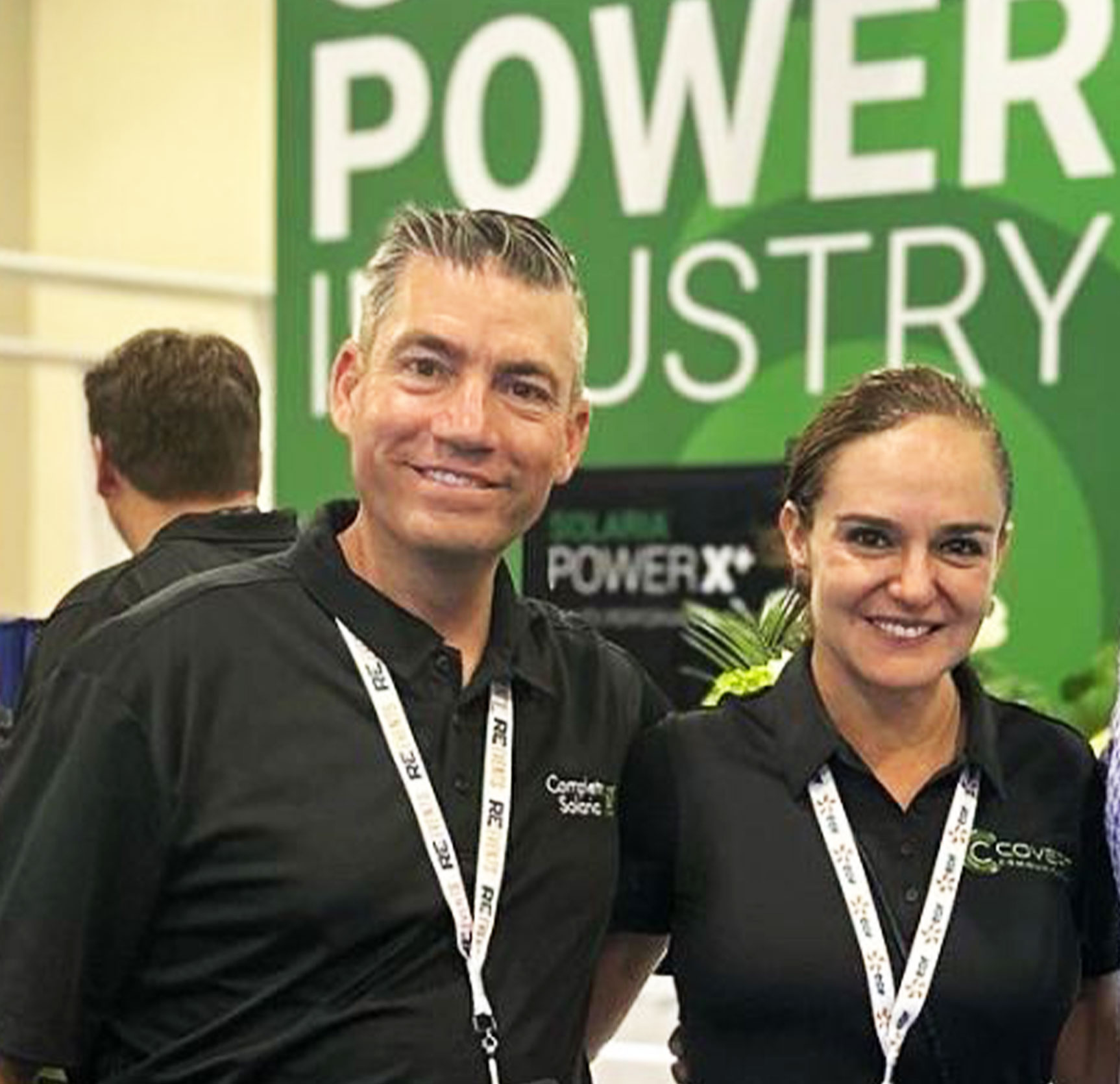

Winning Hearts & Minds Interview with Scott Aronson, CEO of SunRev Inc.
Scott Aronson isn’t your average solar CEO. After nearly 20 years at the Better Business Bureau—five of those as Vice President—he’s brought a customer-first philosophy to solar sales, and it’s paying off. In a market crowded with confusion and half-truths, Scott and his team at SunRev are leading with radical transparency.
While many in the industry chase the one-call close, SunRev is proudly on the opposite side of the fence. In fact, they won’t let customers sign on the first presentation. Why? Because they believe real trust is built through education—not pressure. And it’s working. With a sit rate of over 80%, SunRev’s team earns second meetings by promising something no one else does: answers to five questions other solar companies won’t touch.
- What’s the real difference between solar panel warranties—and why does it matter who you buy from?
- How does battery storage really work under NEM 3.0—and what happens if there’s a blackout during peak hours?
- How long will your battery last—and how much will it cost to replace it?
- What will it cost to remove and reinstall your solar panels when you replace your roof?
- How do low-interest solar loans really work—and what will you owe if you sell your home early?
Let’s dive into each of these questions—and the answers might just surprise you.
1. Panel Quality & Warranties—The Details That Matter
Anna: Let’s start with panels. Homeowners are bombarded with options and marketing claims. What’s the conversation you’re having that most reps skip?
Scott: Everyone loves to say, “These are high-quality panels.” But that means nothing without context. The real question is, what’s actually covered, and by whom? Most reps gloss over the warranty details, but that’s where the long-term value lives. A panel is only as good as the company standing behind it.
Take REC, for example. It’s a trusted name. But if you buy it through Powur, you get a 30-year warranty that includes roof penetration coverage. That’s a massive upgrade compared to the standard 25-year manufacturer-only warranty—and most customers never even hear about it.
Two homeowners could install the exact same panel and walk away with completely different levels of protection, just based on who they bought it from. It’s like buying the same car from two different dealerships—one throws in full bumper-to-bumper coverage, the other leaves you stranded after year five. Same product, entirely different outcome. If a rep isn’t explaining that, they’re just chasing the sale. We slow it down and show people the difference. That’s how you build trust.
2. The NEM 3.0 Battery Trap
Anna: You’ve been vocal about battery storage—especially under NEM 3.0. What’s the big issue you see in the way it’s sold?
Scott: Too many reps are selling batteries like they’re backup generators. That’s a lie—and a dangerous one. Under NEM 3.0, batteries are primarily designed to save money by discharging during peak utility rates—not to keep your lights on during a blackout.
Picture this: there’s a power outage at 7 PM. That battery everyone promised would “keep the power flowing”? It’s likely already been drained between 4 and 9 PM, because that’s when it was programmed to offset high rates. We call that the Energy Albatross. It drags down expectations and creates this false sense of security. Customers think they’re buying peace of mind when, in reality, they’re buying a time-of-use savings tool.
Anna: So how do you frame that without losing the sale?
Scott: You ask the right question: “Are you okay knowing your battery might be empty during an outage?” That question hits home. If backup power is important to them, we recommend a second battery—or we realign the conversation around priorities.
We’re not here to sell fantasies. We’re here to make sure the system does what they expect. Because when the power does go out, they’re not going to remember the monthly savings—they’re going to remember who gave it to them straight.
3. Battery Replacement: The Conversation No One Wants to Have
Anna: Many homeowners assume that once they go solar, the system will last for their lifetime. But batteries don’t. Why do you think most reps avoid bringing that up?
Scott: Fear. Plain and simple. They’re afraid that if they mention anything with a price tag down the road, they’ll lose the sale. But that’s short-term thinking—and it’s why so many homeowners end up blindsided later.
Here’s the truth: your battery is going to need to be replaced in about 15 years. If you paid in cash or financed the system, that replacement isn’t included. It’s coming out of your pocket. And if no one told you that upfront? That’s not just lazy—it’s dishonest.
So we tell people early: “This battery is going to save you money, but it’s not going to last forever. Here’s what a replacement will cost in today’s dollars. Let’s build that into your financial plan now.”
We’re not afraid to have that conversation. In fact, we think it’s our job. Because I’m not just looking to make one sale—I want to be the person they come back to in 15 years when they need that new battery. And they will. But they’ll come back happy—because we told them the truth from day one.
4. Planning for the Inevitable: Your Roof’s Role in Solar
Anna: Roofs are one of those overlooked issues that can blow up later. How do you approach that conversation differently?
Scott: It’s massive—and most reps either ignore it or downplay it to keep the deal moving. But here’s the reality: if your roof is 15 years old and your panels are built to last 30, you’re guaranteed to face a reroof during your system’s life. And removing and reinstalling panels? That’ll run you about $5,000 today—maybe more in the future.
Now, most reps hear “15-year-old roof” and say, “That’s great!” Then they keep going like it’s no big deal. We don’t do that. We stop right there and say, “Let’s talk about what happens in 15 years—and how you can prepare for it now.”
Because if we don’t, someone else is going to pay the price later. The key question I ask every time is, “Did any other company bring this up?” The answer is almost always no—and that’s when the customer realizes who’s actually looking out for them.
We’re not in this for the quick close. We’re thinking 10, 20, or 30 years ahead. That’s how you earn the deal—and keep the relationship.
5. The Financing Game—What APR Doesn’t Tell You
Anna: Loans used to be a major win for homeowners—especially during COVID when rates hit historic lows. But things have shifted. What’s your take on how financing is being sold today?
Scott: During COVID, solar loans were unbeatable. You had 0.99% and 1.99% rates all day. At those numbers, loans were a fantastic deal. But that era is gone. Today, interest rates are up, and too many reps are still pushing 3.99% loans without explaining what those actually cost.
Here’s the truth: To offer a “low APR,” lenders have to buy down the rate from whatever the prevailing solar interest rate is at the time—often 11% or 12%. That buy-down cost is added to the loan principal upfront, much like buying mortgage points. In other words, the lender inflates the total loan amount by tens of thousands of dollars so it makes financial sense for them to offer a low interest rate.
Now, if a customer chooses a 25-year loan with a low APR—say, 3.99%—they will save the most money over time. Even with the higher loan principal, the long-term interest savings typically outweigh the upfront cost. Over 25 years, the total payments on a 3.99% loan will be significantly lower than those on an 11% or 12% loan with no buy-down.
But here’s where it gets tricky—and where most solar salespeople fail to explain it properly. If the customer pays off the loan early, they’re likely to face a much higher payoff balance than they’d expect. Why? Because the inflated principal from the rate buy-down is still there, even if they’re exiting the loan in year three. That extra cost doesn’t disappear just because they didn’t hold the loan to term.
So I tell customers, “If you plan to stay in the home long-term and are comfortable carrying the loan to maturity, then a low APR product makes great financial sense. But if there’s even a chance you’ll sell the home in a few years—or if you’re debt-averse, even at a low interest rate—then go with the higher APR loan. Your monthly payments will be higher, but your loan balance will be much more straightforward if you decide to pay it off early.”
Otherwise, a well-meaning but undertrained rep might end up with an angry customer a few years later, wondering, “Why is my payoff $20,000 more than what the system even cost?”
That’s the consequence of poor financial education in the sales process—something too many solar bros simply don’t understand.
Here’s how we break it down for the consumer:
Loan Comparison Example: Understanding APR and Loan Terms
When financing a solar system, the structure of the loan can significantly affect both your total repayment and the amount owed if you choose to pay off early. Below is a real-world comparison between two common loan types:
- Cash Price of System: $53,469
- Federal Tax Credit (30%): $16,041
- Net System Cost After Tax Credit: $37,428
Let’s assume the homeowner uses the tax credit as intended and is financing only the net system cost of $37,428.
Loan Option 1: 11.99% APR for 25 Years or 300 months
- Monthly Payment: $427.60
- Loan Principal: $37,428 (matches system net cost)
- Early Payoff Impact: Payoff aligns closely with remaining balance; no inflated principal.
Loan Option 2: 3.99% APR for 25 Years
- Monthly Payment: $337.00
- Loan Principal: $61,636
- Early Payoff Impact: The customer would still owe the full $61,636 (minus payments made), even if paying off early.
Key Insight:
In this example, the bank charged $24,208 more upfront (the difference between the two principals) to buy down the interest rate from 11.99% to 3.99%. That cost is added directly to the loan principal.
If the customer holds the loan for the full term, the lower interest rate provides substantial savings in total payments over time. However, if they choose to pay off the loan early, they may be surprised by a significantly higher remaining balance—since that buy-down cost doesn’t go away.
Scott (continued): This is the kind of financial trap homeowners walk into every day—and no one’s warning them. We are.
That’s why I ask every customer, “Are you planning to move in the near future?” Because if they are or want to pay off the loan, then that shiny 3.99% APR could be an expensive mistake. We walk them through the real math—not a sales pitch. I’m not here to close a deal—I’m here to make sure they don’t get burned.
If a rep can’t explain financing—or worse, chooses to hide it—they have no business selling solar. Our job is to protect the customer, not bury them in a loan they’ll never dig out of. That’s not sales. That’s sabotage.
And if your rep isn’t walking you through this? They’re not protecting you—they’re protecting their commission.
I don’t care how slick the pitch is—if you can’t break down the numbers with complete transparency, you shouldn’t be in this industry. Period.
We’re not afraid to slow the sale down. Because once homeowners see the full financial picture, the choice becomes obvious. They go with the company that told them the truth.
Final Thoughts: Truth, Transparency, and the SunRev Difference
Anna: What’s the biggest sales lesson you’ve learned since launching SunRev?
Scott: That honesty is the ultimate closing tool. We don’t sell—we educate. We challenge assumptions, expose shortcuts, and call out the competition by name.
If they met with Tesla, I’ll ask, “Let me guess—you got a 20-second call with zero details?”
Sunrun? “Did they try to push a PPA without ever explaining what ownership actually means?”
We know the game. We know the script. So when we break it—when we slow down, show the math, and speak the truth—people pay attention.
Anna: So when it’s time to close, what do you say?
Scott: I just ask, “Did the other companies tell you all this?”
And 9 times out of 10, they say, “No.”
That’s it. That’s the moment they realize who’s really in their corner.
Because when you lead with truth, you don’t need pressure. You don’t need gimmicks. You earn trust—and trust closes the deal. Every. Single. Time.